






































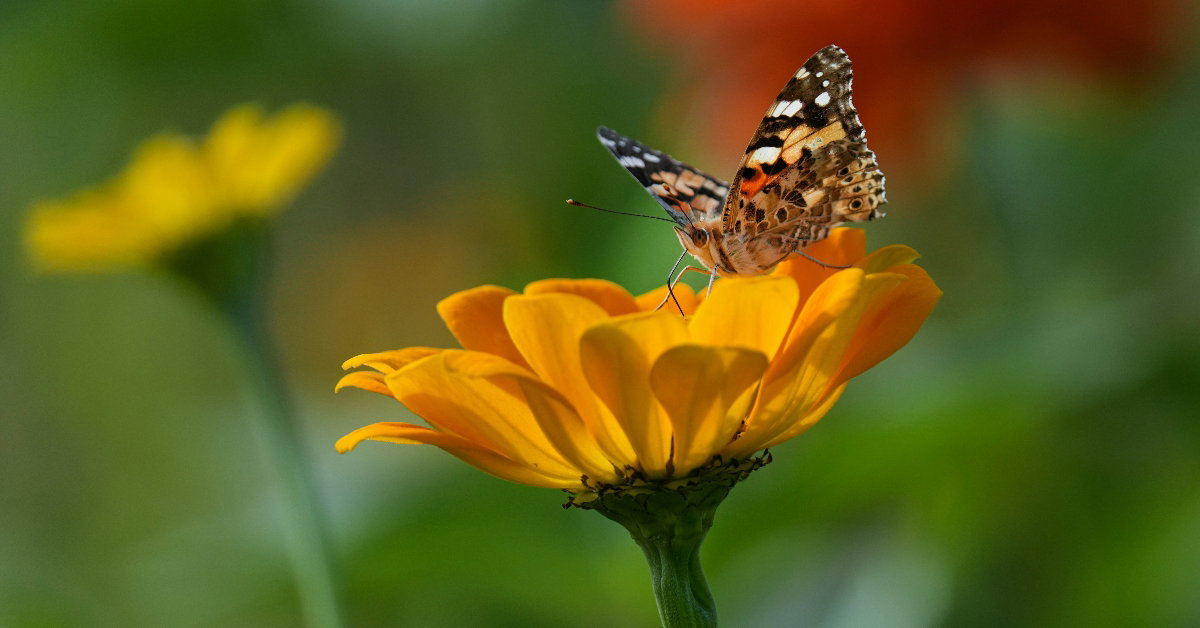
Researchers have found that vibrantly colored butterflies are now less common because humans keep replacing forests with colorless buildings.
Experts explained why it’s happening
If you’ve noticed a decrease in colorful butterflies in your area, it might be because of deforestation.
According to researcher and photographer Roberto García-Roa, who spoke with The Guardian about the phenomenon, the vibrant colors of butterflies are depleting.
Colors are needed for more than one reason
The expert explained that butterflies once relied on their pigments to attract mates and hide from prey. These are now depleting as colorful tropical forests get replaced with human infrastructure.
“The colors on a butterfly’s wings are not trivial – they have been designed over millions of years,” García-Roa said.
He’s documenting habitat loss
García-Roa told the outlet that he’s working to document how habitat loss is draining the pigments of the natural world in Brazil.
RELATED STORIES



“You feel alive in the tropical forest, everything is wild – you never know what you are going to find,” he said.
The lack of diversity is removing color
The researcher explained that as the diversity of ecosystems decreases with humans’ expansion of their cities, it causes the balance of nature to shift.
García-Roa gave an example on how things are changing in Brazil, saying that animals are ‘not around’ the way they used to be.
Things are different now
“When you arrive at a eucalyptus plantation, it’s very frustrating — you can feel that things are not happening as they should be in a natural ecosystem,” García-Roa explained.
“Animals are not around, and sounds are not as they should be.”
Butterflies changed their colors to adapt
Ricardo Spaniol from the Federal University of Rio Grande do Sul also told the outlet that butterflies have had to adapt their appearance as tropical forests are replaced with concrete and brick.
They’re adapting to survive
Spaniol said, “The most colourful species are often the first to disappear locally after deforestation, probably because of the loss of native vegetation and their increased exposure to predators.”
“This represents an accelerated process of discoloration in Amazonian butterfly communities.”
Spaniol also touched on other issues
“Even planet Earth itself is losing brightness as seen from space. It is truly remarkable and concerning how interconnected these processes are, and how every impact cascades into further consequences,” Spaniol added.
“The most colorful species are often the first to disappear locally after deforestation, probably because of the loss of native vegetation and their increased exposure to predators.”