





































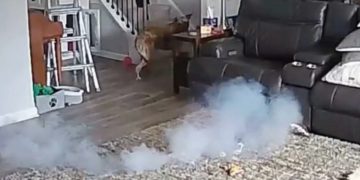




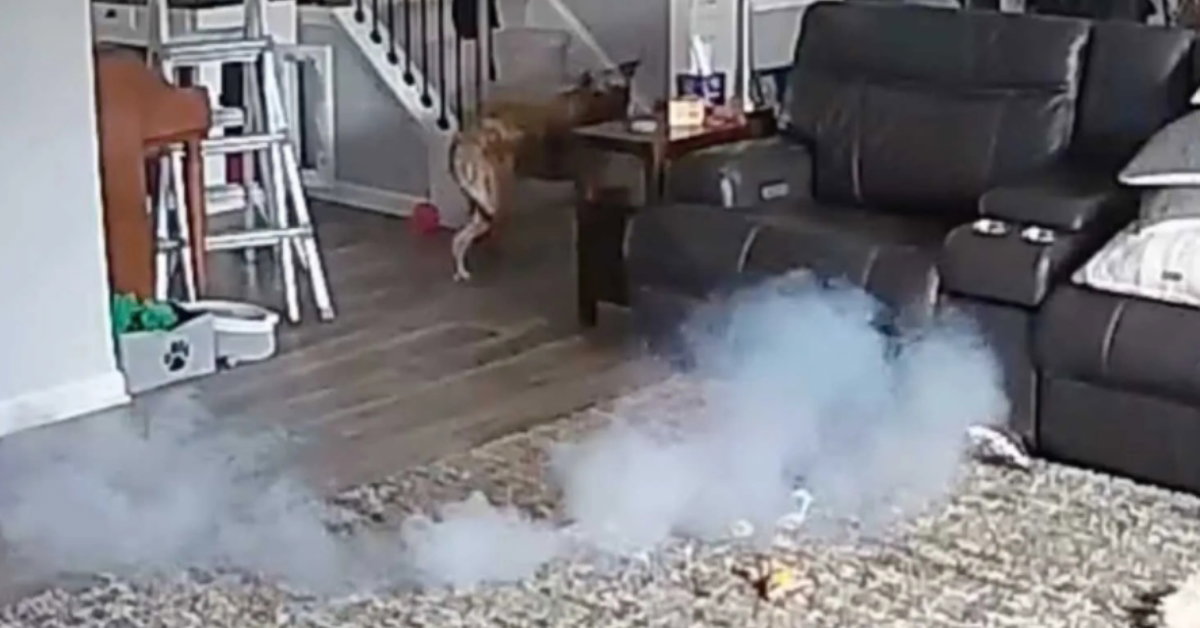
A dog started a house fire in a Chapel Hill, North Carolina home after chewing on a lithium-ion battery.
The fire department shared footage of it
Footage of the incident, captured by the homeowner’s security system, was shared by The Chapel Hill Fire Department (CHFD) on social media.
It shows the dog, Colton, chewing on a lithium-ion battery on the carpet, before it starts to go up in smoke as he backs away from it.
They explained what happened
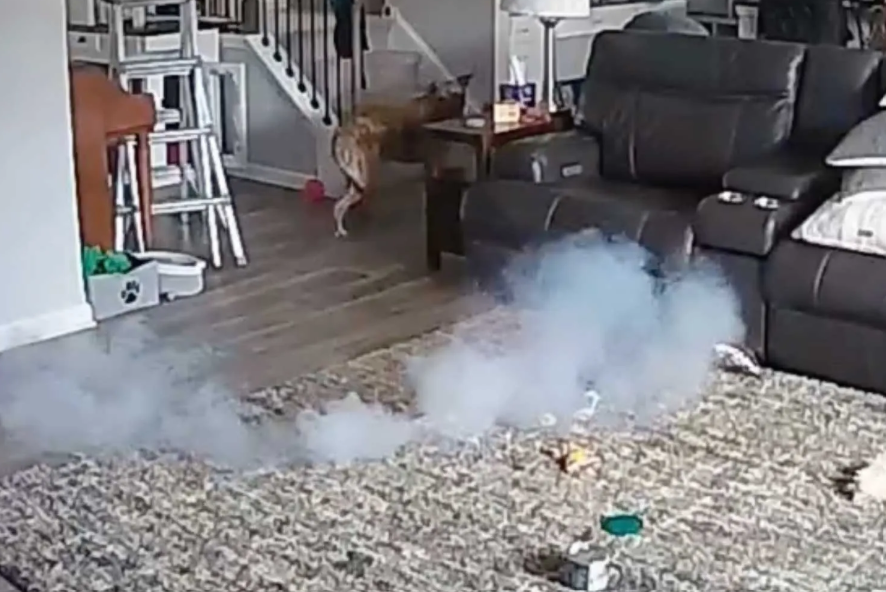
In the post on Tuesday, October 14, the CHFD wrote, “Colton is a good boy, but he counter-surfed while his humans (a CHFD family) were away and got hold of a device with a lithium ion battery.”
The dog wasn’t injured
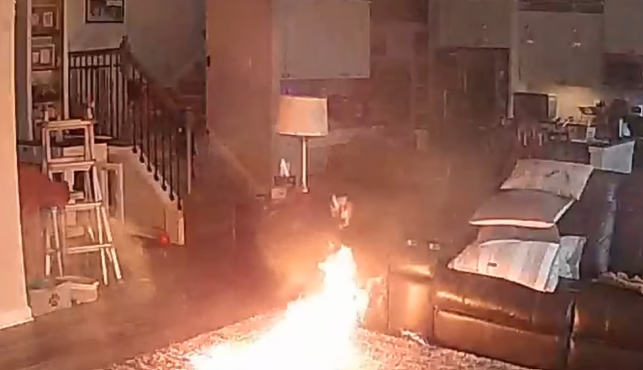
The battery was charged and unplugged, the CHFD said, and it ‘wasn’t under any recalls,’ but it ‘wasn’t stored safely’.
“Thankfully, he wasn’t injured, and other than some smoke damage and a ruined rug, the house is fine,” the CHFD said.
The emphasized how important safety is

“On the heels of Fire Prevention Week, we want to remind you how important it is to safely charge, store, and use lithium ion batteries,” the CHFD added.
RELATED STORIES




The dog’s owner, David Sasser, who is a firefighter for the CHFD, shared the moment he learnt about the incident.
He spoke with the news about it
Speaking to local news outlet WRAL, Sasser said that he received an alert about the fire from his home security system.
“[My] heart sank. I had no idea what was going on. I had no clue what it could possibly be and came home to find that the rug had burned up,” he said.
His family wasn’t at home when it happened
Sasser added that his family wasn’t at home when the incident took place, but that they were able to get home quickly.
“Thankfully, it pretty much fizzled out because of the rug and because we were home so quickly,” he said. “[The rug] was the only thing we lost.”
Lithium-ion batteries can overheat
The National Fire Protection Association’s website states, “Lithium-ion batteries are increasingly found in devices and systems that the public and first responders use or interact with daily.”
“While these batteries provide an effective and efficient source of power, the likelihood of them overheating, catching on fire, and even leading to explosions increases when they are damaged or improperly used, charged, or stored.”